Learning How to Build a Path Forward: Reflections from the Ultragenyx Rare Entrepreneur Bootcamp
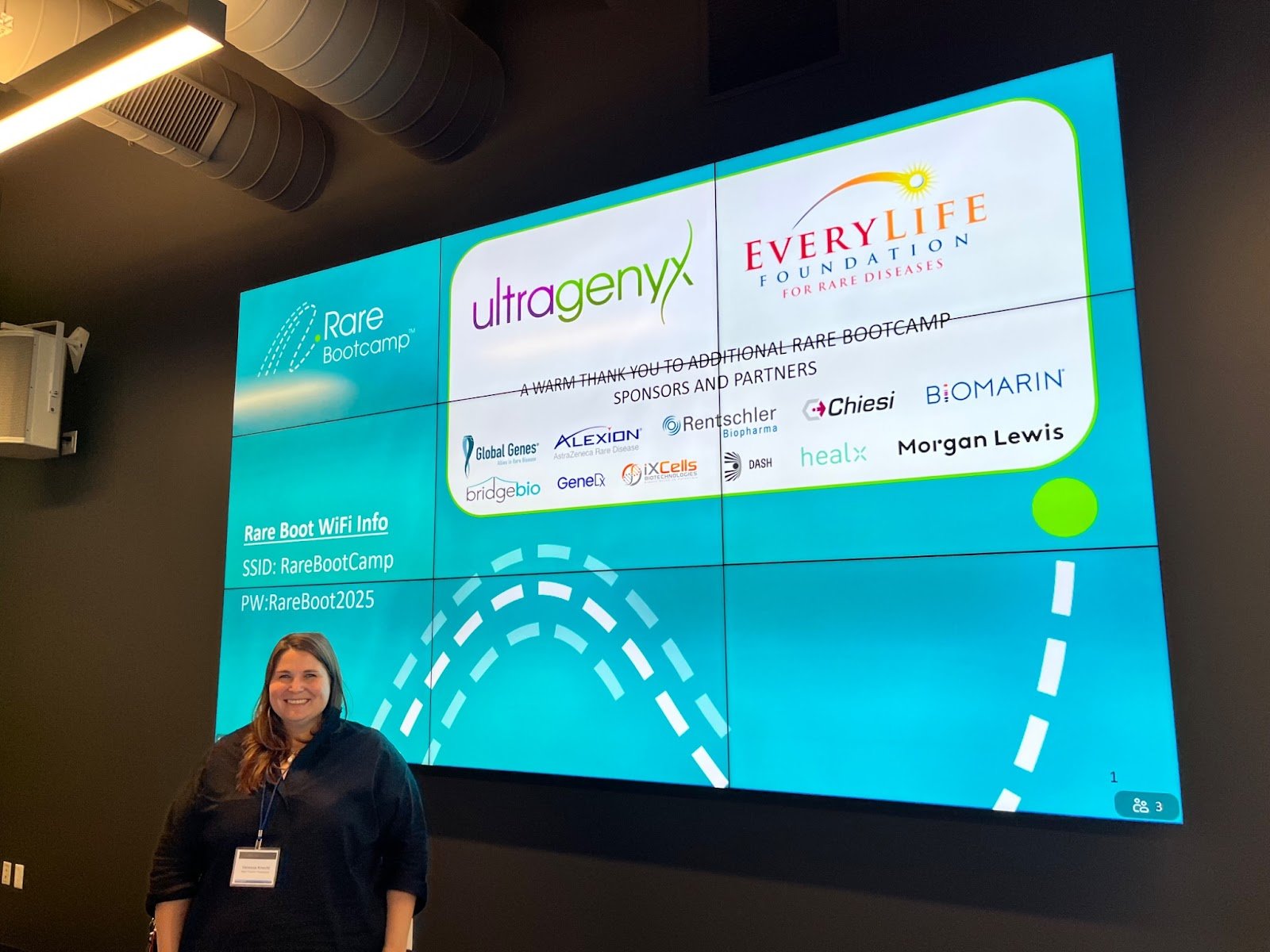
In November, I had the extraordinary opportunity to attend one of the most impactful gatherings I’ve ever experienced as a parent advocate: the Ultragenyx Rare Entrepreneur Bootcamp.
This three-day intensive bootcamp—generously hosted by Ultragenyx, a biotech company deeply committed to rare disease, and supported by partners including the Everylife Foundation, and others—is designed to equip parents and advocates with the tools, language, and confidence needed to advance treatments for rare diseases.
The bootcamp was launched by Ultragenyx CEO Dr. Emil Kakkis, whose long-standing philosophy has been simple but powerful: when families ask for help, you help. Over the years, Dr. Kakkis and his team had been advising families one-by-one on how to navigate the drug development process. The bootcamp was created to make that knowledge broadly accessible to parents who are often starting from scratch—without formal training in biotech, drug development, or regulatory science.
As Dr. Kakkis shared in an Ultragenyx press release:
“Our policy is if someone asks us for our help, we help them. Because we believe sharing our knowledge helps advance the entire field of rare disease medicine.”
For parents like me—whose children are affected by ultra-rare genetic conditions—this kind of openness is transformative. More than 95% of rare diseases still have no approved treatment. The barriers to entry are enormous. And yet, parents are stepping forward anyway.
Presenting on 2q37 Deletion and HDAC4
The bootcamp began with each participant giving a short pitch on stage. We were coached by a public speaking expert and given candid, constructive feedback on how to communicate our mission clearly and effectively.
I spoke about 2q37 deletion syndrome, an ultra rare neurodevelopmental condition caused in many cases by loss of one copy of the HDAC4 gene—and about why we’ve launched the HDAC4 Rescue Feasibility Study through the Rare Futures Foundation.
I shared a truth that still stops me in my tracks every time I say it out loud: there are enough people living with rare diseases in the U.S. to fill every single NFL stadium at the same time. And yet, the vast majority—many of them children—have no disease-modifying treatment.
The feedback I received was clear and encouraging: lead with the science, but never lose sight of the child. Put our daughter front and center—not just as my motivation, but as the reason this work matters.
Drinking from the Firehose—in the Best Way
Over three days, we covered the drug development process from end to end:
Basic and translational science
Therapeutic approaches, including ASOs, gene therapy, CRISPR-based strategies, mRNA, and drug repurposing
Designing and funding natural history studies
Developing meaningful biomarkers and endpoints
Navigating academic collaborations, CROs, and IP frameworks
Understanding regulatory pathways and FDA engagement
Making projects legible and attractive to biotechs and investors
For our work at Rare Futures—where we are actively advancing cell-based models and ASO rescue testing for HDAC4 haploinsufficiency—this knowledge is not theoretical. It directly informs how we structure our research, prioritize modalities, and de-risk future therapeutic paths.
Leaving Encouraged, Not Overwhelmed
In addition to the formal sessions, we had the opportunity to meet directly with experts across translation research, drug development, and rare disease advocacy, and were encouraged to stay in touch beyond the bootcamp. The generosity of time, knowledge, and ongoing support has been remarkable.
This work is still incredibly hard. The road ahead for HDAC4 and 2q37 deletion is long. But I left the bootcamp feeling something I don’t always feel in this space: encouraged.
Encouraged that we are asking the right questions.
Encouraged that parent-led research can be rigorous and credible.
Encouraged that Rare Futures is building something grounded in both science and community.
I am deeply grateful to Ultragenyx for creating this space, and for believing that empowering families ultimately advances the entire rare disease ecosystem.
With hope and persistence
— Vanessa